Respiratory Virus Guidelines
Unified recommendations have been developed to address risks from a range of common respiratory viral illnesses.
Prevention
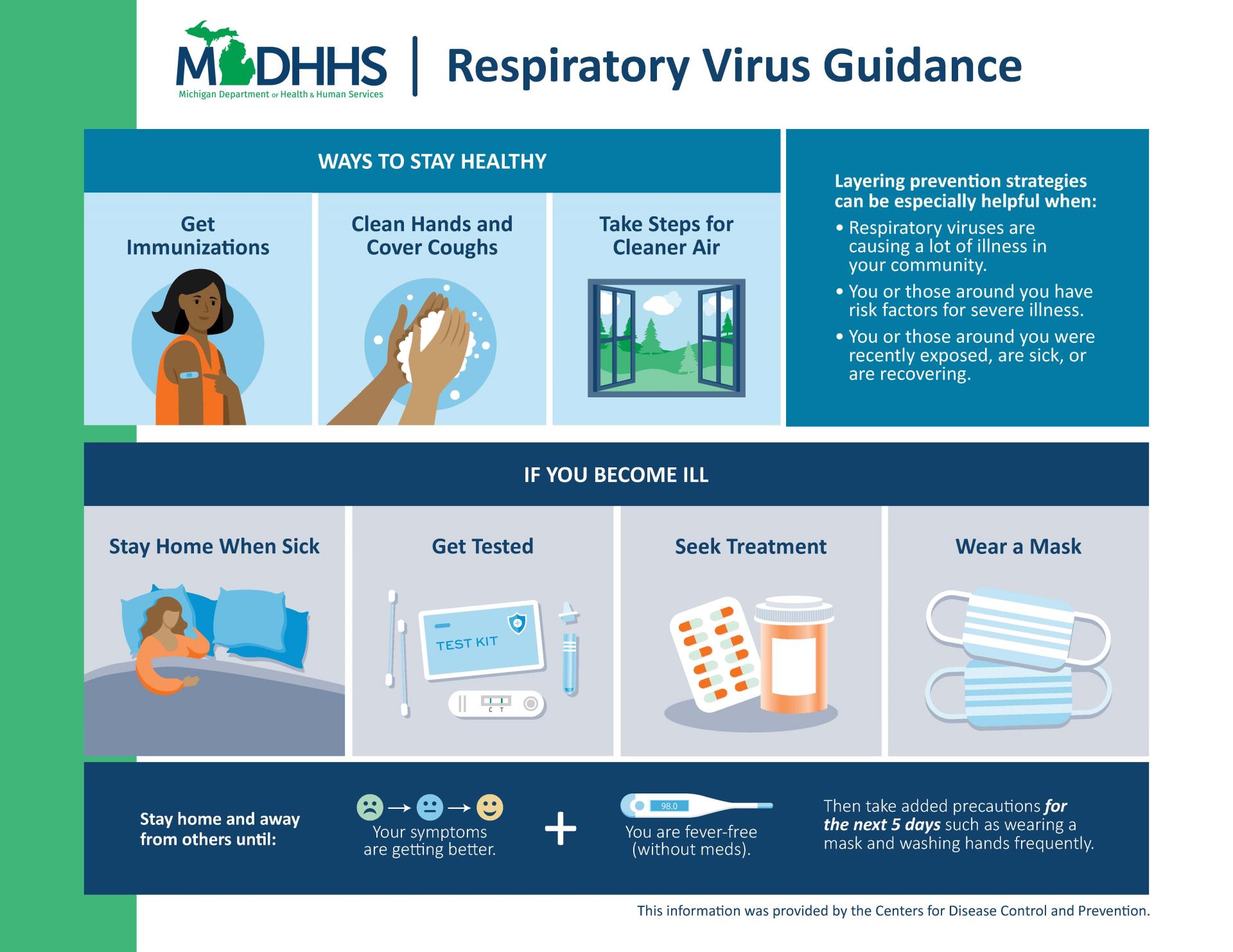
Prevent respiratory viral illnesses by:
- Staying up to date with flu, COVID-19 and RSV vaccinations that protect people against serious illness, hospitalization, and death.
- Call your health care provider or local pharmacy to schedule a RSV vaccine appointment.
- Practice good hygiene.
- Cough or sneeze into your sleeve or a tissue and throw the tissue in the trash after you use it.
- Avoid touching your eyes, nose and mouth.
- Wash your hands with soap and water after coughing, sneezing, or touching common surfaces like doorknobs, keyboards, and telephones Use an alcohol-based sanitizer if soap and water aren't available.
- Clean frequently touched surfaces.
- Taking steps for cleaner air like bringing in more fresh outside air, purifying indoor air, or gathering outdoors.
When Sick
If you develop a respiratory virus:
High Risk Individuals
People with certain risk factors for severe respiratory virus illness are:
Individuals at high risk need to exercise caution from respiratory viral illnesses.
Hand Washing Instructions
- Use soap and running water.
- Rub your hands vigorously for 20 seconds.
- Wash all surfaces, including:
- Backs of hands
- Wrists
- Between fingers
- Under fingernails
- Rinse well.
- Dry hands with a paper towel.
- Turn off the water using a paper towel instead of bare hands.
For additional information about cleanliness and to avoid spreading illness, visit our Hand Washing web page.
Related Links
