Contact Info
Water Resources Commissioner
248-858-1066
One Public Works Drive
Building 95W
Waterford, MI 48328-1907
Emergency After Hours: 248-624-6366
8:00am - 4:30pm

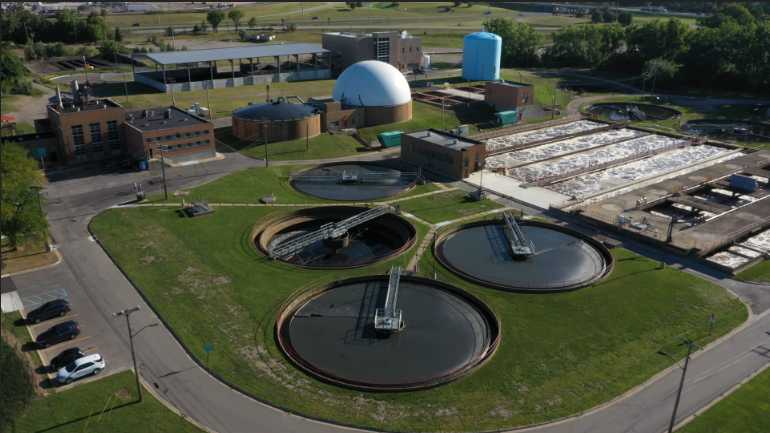
The Pontiac Clinton River Water Resource Recovery Facility recently completed the construction of a new Thermal Hydrolysis Pretreatment (THP) system, sludge dewatering system improvements, expansion and improvement of the existing dewatered biosolids storage facility, and construction of a new septage receiving facility. The THP system is a newer and innovative process that involves conditioning of the sludge under high heat prior to anaerobic digestion. This process results in a more easily digested sludge and a Class A Exceptional Biosolids.
The Michigan Department of Environment Great Lakes & Energy (EGLE) define Biosolids as "nutrient-rich organic materials, which remain following the treatment of domestic sewage at a wastewater treatment plant (WWTP). ... Biosolids are typically beneficially used on agriculture land, although under certain conditions biosolids can be used on forest lands, reclamation sites and public use sites."
Decades of studies have demonstrated that biosolids can be safely used on food crops. The National Academy of Sciences has reviewed current practices, public health concerns and regulator standards, and has concluded that "the use of these materials in the production of crops for human consumption when practiced in accordance with existing federal guidelines and regulations, presents negligible risk to the consumer, to crop production and to the environment." In addition, an epidemiological study of the health of farm families using biosolids showed that the use of biosolids was safe.
We work with EGLE on all monitoring and reporting of our product. Below you will find the frequency.
| Amount of Sewage Sludge 1 (metric tons per 365-day period) | Frequency |
|---|---|
| Greater than zero but less than 290 | Once per year |
| Equal to or greater than 290 but less than 1,500 | Once per quarter (four times per year) |
| Equal to or greater than 1,500 but less than 15,000 | Once per 60 days (six times per year) |
| Equal to or greater than 15,000 | Once per month (12 times per year) |
The plant consists of two geographically separate treatment facilities, the East Boulevard Wastewater Treatment Plant and the Auburn Wastewater Treatment Plant. The East Boulevard Plant has a present average daily flow of 5 million gallons per day and the Auburn Plant has a present average daily flow of 14 million gallons per day. The two plants are interconnected, operated, and regulated like a single combined wastewater treatment plant.
Our two-story, 15,800 square foot biosolids handling building houses multiple sludge pumps, sludge screening equipment, pre-THP and post-digestion biosolids dewatering centrifuges, the thermal hydrolysis process (THP) train, steam boilers, polymer storage and feed, electrical equipment, instrumentation and controls.
No. The biosolids produced from our Clinton River Water Resource Recovery Facility has just been classified as a Class A Exceptional Biosolids by the Michigan Department of Environment, Great Lakes, and Energy (EGLE). This product will be shared with local communities for the benefit of area parks and recreation.
Yes! For more information about touring the Clinton River Water Resources Recovery Facility call us at (248) 858-4325.
If you have more questions about the Clinton River Facility or our Biosolids Process please contact us by sending an email to WRCbiosolids@oakgov.com.