
Homeland Security, Wellness & Professional Development Division
|
CAPTAINTodd HillCommander | Homeland Security, Wellness and Professional Development Division |
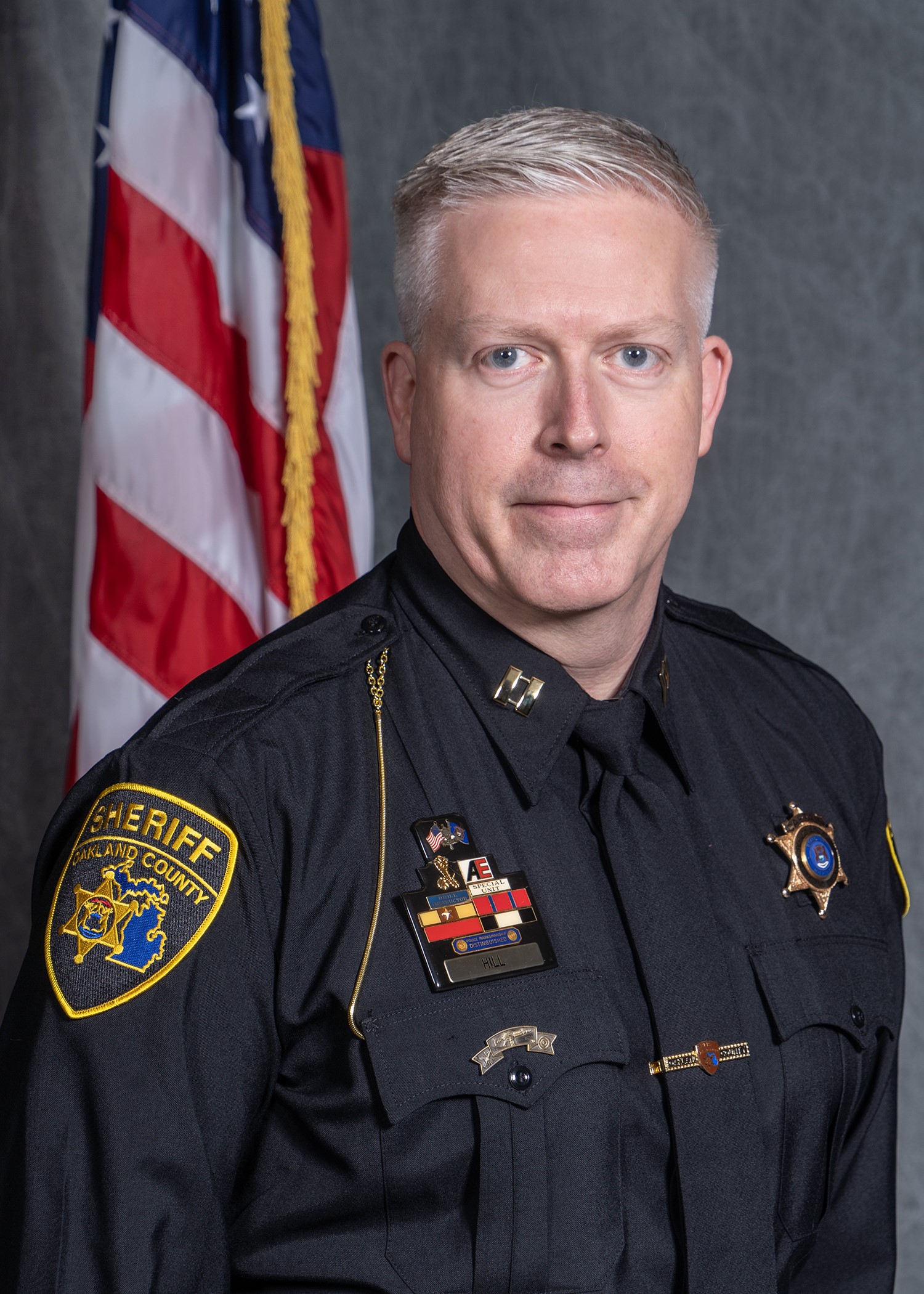
Captain Todd Hill is the Commander of the Homeland Security, Wellness & Professional Development (HSWPD) Division. He oversees the Sheriff’s Homeland Security initiatives, Accreditation, Comfort K9 Unit, Peer Support Program, Crisis Response Unit, Co-Responders, Training Unit, Force Analysis Unit and Recruiting/Retention. The HSWPD Division was formerly known as the Emergency Response and Preparedness (ERP) Division. In addition to the above units, Captain Hill supervised the Aviation and Drone Units, as well as the Special Weapons and Tactics (SWAT) Team, which have since been moved to Patrol Services.
Captain Hill was hired by the Oakland County Sheriff's Office in 1995 as a Deputy. He was promoted to the rank of Sergeant in 2011, Lieutenant in 2016 and to his current position of Captain in 2022.
Captain Hill has previously served as a Substation Commander for the contracted area of Independence Township (Patrol Services Division) and has worked in several other areas of the Sheriff's Office, including the Satellite/Court Services Division; Pontiac Division; Investigative and Forensic Services Division (as a Fugitive Unit and Auto Theft Detective); Uniformed Patrol in the Alcohol Enforcement, Crash Reconstruction and Motor Units; and the Corrective Services Division.
Captain Hill has received numerous awards, including Command Officer of the Year (2016), Meritorious Service Citations, Professional Excellence Citations and Distinguished Unit Citations.
Captain Hill has earned a Doctor of Education degree (Ed.D.) in Organizational Leadership (Oakland University), a Master's degree in Information Security and a Bachelor's degree in Criminology, both from Eastern Michigan University. He is also a graduate of the Federal Bureau of Investigations National Academy (FBINA Class #285) and the Northwest Police Staff and Command School.
Captain Hill is a United States Marine Corps Veteran, deployed to Saudi Arabia and Mogadishu, Somalia, in the 1990s.

The Homeland Security, Wellness & Professional Development Division (formerly the Emergency Response and Preparedness Division) is a division within the Sheriff's Office dedicated to professionalism and community protections. When originally created, it was an expansion of Oakland County Emergency Management in the aftermath of the September 11, 2001 terrorist attacks.
The division's primary responsibilities include all Homeland Security initiatives, Accreditation, Comfort K9 Unit, Peer Support Program, Crisis Response Unit, Co-Responders, Training Unit, Force Analysis Unit, and Recruiting/Retention.
This division coordinates functions with other county law enforcement agencies, the State Police, the FBI, USSS, Customs, INS, and the US Attorney's Office.
You may download the Oakland County Sheriff's Office Emergency Handbook, which is an informative and useful guide on how to be better prepared in the event of an emergency.
HSWPD Programs and Units
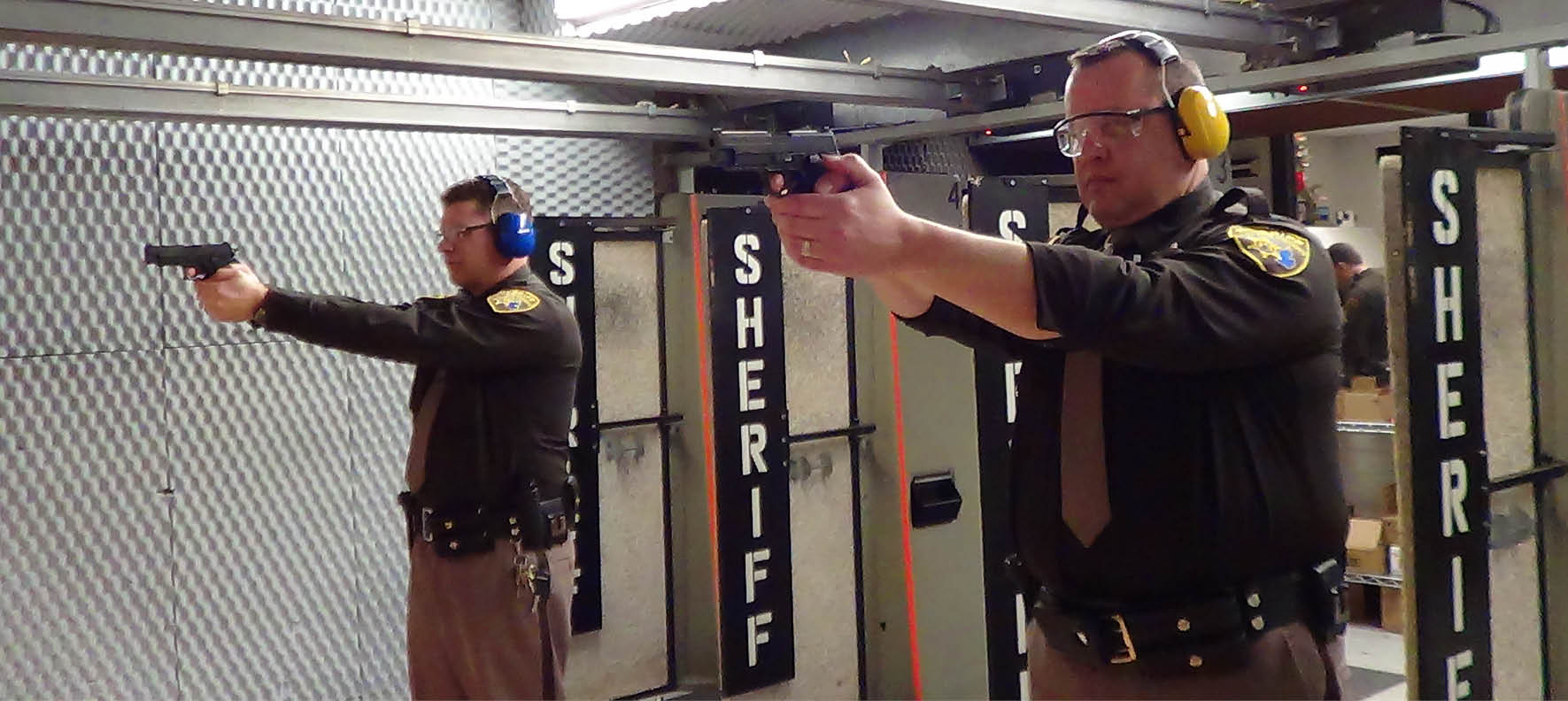
The Sheriff's Office Training Unit is responsible for the development, planning, scheduling and maintenance of all in-service and off-site law enforcement-related instruction. Designated to cover the educational needs of the Sheriff's Office, the Training Unit is responsible for the training of corrections officers, certified officers, and non-certified/civilian personnel. A strong "in-house" instructional staff, combined with specialized on-site/off-site vendor training and an online learning system, provide members of the Sheriff's Office with the best information available in various topics relevant to effectively upholding the law.
The Training Unit maintains records and oversees the following departmental functions:
- The State-Certified Corrections Academy (In-house training for newly-hired deputies)
- The Field Training Officers program (Both Corrections and Patrol)
- The Firearms Range--handgun, shotgun, rifle, TASER, baton, pepper spray and Firearms Training System (FATS) instruction
- The Police Academy (State of Michigan - Michigan Commission on Law Enforcement Standards MCOLES licensing process)
- All In-Service Training Courses (mandated & non-mandated)
- All Off-Site Training Courses
- State & local training fund expenditures
- Student Intern & ride-along programs
- Database management of all Sheriff's employees and related statistics
- Training resource management (equipment, classroom use, video library)
- Concealed weapons permits and their approval
- Emergency deployment of Personal Protection Equipment (PPE) and training for this process
In 2019, a total of 14,261 persons attended training facilitated by the unit, including 9,200 personnel trained in the Gun Range. Training is provided by both in-house staff and outside vendors. The goal of the Training Unit is to continue offering agency personnel the highest level of instructional opportunities. More detailed information about the extensive sessions overseen by the unit is available in the Sheriff's Office Annual Report.
Training Unit: 248-858-4990
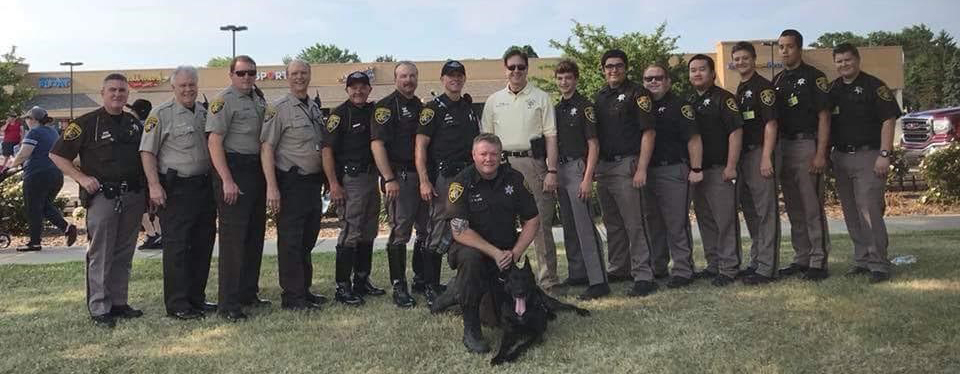
The Oakland County Sheriff's Office Cadet Unit is comprised of aspiring young adults ranging in age from 16 to 21 years old, operating in a volunteer capacity for community events throughout the county. An Oakland County Sheriff Cadet is a young adult, who has a particular interest in law enforcement, and wants to be introduced into what the typical career of law enforcement officer is like through a volunteer position. Sheriff Cadets are taught the fundamentals of law enforcement and experience hands-on training.
Topics of study for our Cadets learn include:
- Criminal law
- Corrective services
- Community policing
- Subject control tactics
- Domestic violence response
- Standard and felony traffic stops
- Building searches and clearing techniques
- Drug and weapon recognition and retention
- Basic handcuffing and searching techniques
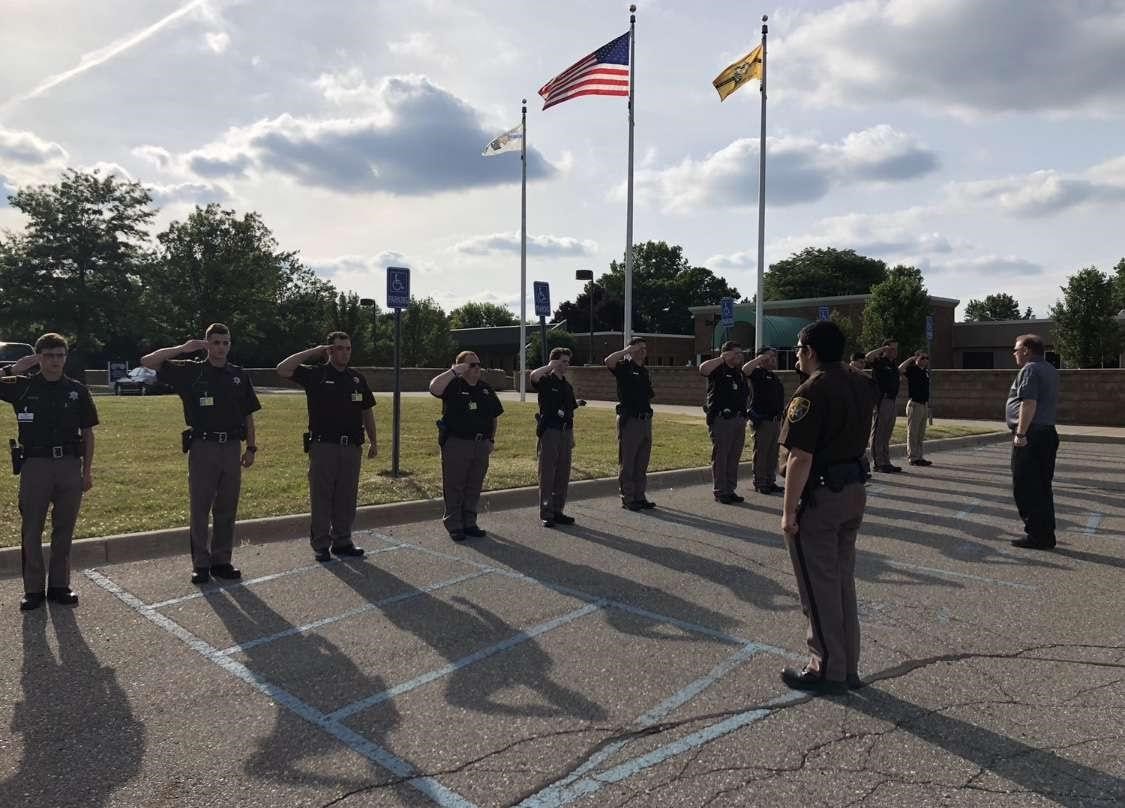 Oakland County Sheriff Cadets are responsible for participating in specialized training details, and volunteer at events such as parades, child fingerprinting programs, festivals, football games and any other event deemed necessary by the Sheriff.
The Cadet Unit also offers a Deputy Shadow Program for qualified Cadets within the Unit. This gives Cadets a one-on-one experience with different law enforcement professionals and special units within the Sheriff's Office that may cater toward future interests of the Cadets.
The Oakland County Sheriff's Office Cadet Unit provides top-tier learning opportunities and experiences while creating lasting relationships with active law enforcement professionals.
For general questions and recruitment contact Sergeant Kristen Rhein (rheink@oakgov.com)
Download the Cadet Application and send completed applications to cadetrecruitment@oakgov.com.
Commanding Officer: Sgt. K. Rhein: rheink@oakgov.com
The Oakland County Sheriff’s Office Peer Support Program (PSP) is dedicated to assist agency personnel with Critical Incident Stress Management (CISM) services, specifically confidential peer support assistance. Recognizing that while performing daily first responder duties, agency personnel become involved in and are exposed to incidents that have the potential to cause various forms of short and/or long-term emotional trauma. The PSP is designed to help in following areas: peer support during times of personal and/or professional stress, early intervention to help mitigate the impacts of stress, referral to program services, and education-based training.
Comprised of 25 trained members and one full-time Deputy, the Peer Support Team is an available resource for all Sheriff’s Office personnel who need assistance to overcome obstacles in their professional or personal life. The goal for each employee participating in the PSP is to be a productive and healthy Sheriff’s Office employee, on and off duty.
The Oakland County Sheriff’s Office Comfort K9 Unit is comprised of 15 Cavalier King Charles Spaniel K9’s. The Cavalier breed was chosen due to their personality traits (affectionate with families, good temperament with young children, and good temperament with other dogs). The breed is notable for its four distinct color patterns, each of which, at various times, was associated with a particular noble family: Blenheim (chestnut markings on a white background), Tricolor (black markings on a white background), Black and Tan (black with tan markings), and Ruby (a rich red).
There are two Comfort K9’s assigned to the Homeland Security, Wellness & Professional Development Division – Deputy Cali (Instagram @deputy.cali) and Deputy Scarlett (Instagram @deputy.scarlett). The remaining Comfort K9’s are assigned through the Patrol Services Division and Emergency Communications & Operations Division (Dispatch).


The Sheriff’s Office received a three-year grant to fund a Crisis Response Unit (CRU) from December 2022 to December 2025). The CRU is comprised of one sergeant and two deputies dedicated to respond to incidents involving persons in a co-occurring substance abuse and mental health crisis. Responding to incidents county wide, the CRU works cooperatively with community stakeholders. Partnering with the Oakland Community Health Network (OCHN), the CRU provides referral to applicable services and enhanced response to persons in crisis, to reduce opioid, stimulant, and substance abuse, along with treating mental health.
The Crisis Response Unit’s objective identifies potential needs of the community from calls for service that have a link to Opioid/substance abuse. The CRU attempts to follow up with listed subjects and or friends and family, to connect them with appropriate resources provided to the community. The intent is to slow the escalation of individual user’s Opioid abuse and reduce the likelihood of recurring calls for service and other related effects on the health and safety of the community.
The Sheriff’s Office Co-Responder (CoRe) Program is a Mental Health Community Outreach Initiative, which contracts an Oakland Community Health Network (OCHN) mental health clinician with the Oakland County Sheriff’s Office. CoRe’s commitment is to partner deputy response with community mental health/substance use disorder resources, to improve services to those impacted by behavioral health crises. The program serves to supplement the overall response with a specialized approach to provide added support to first-responding officers before, during, and after a crisis occurs.
The goal in an incident stemming from a behavioral health crisis is to utilize the least restrictive measures to secure the welfare of all those concerned, connect individuals to needed services, and divert individuals experiencing a crisis from the criminal justice system whenever possible. This cooperative initiative seeks to enhance community response to people in crisis by embedding a proactive mental health clinician in the field who provides services and resources for proper mental health follow-up. By doing this, the need for repeated and emergency police involvement is reduced, minimizing the potential of force or response to resistance from being used. The ideal resolution for a behavioral health crisis incident is to connect the subject involved with resources that can provide long term stabilizing support.
The Sheriff’s Office implemented a dedicated recruiter to increase the Sheriff’s Office recruitment and retention efforts. The Recruiting Sergeant serves as a liaison officer with Human Resources regarding recruitment activities.
For more information click on https://joinocso.com/ or contact Sergeant Kristen Rhein (OCSOrecruitment@oakgov.com)
The Force Analysis Unit reviews all incidents of the below for proper tactic’s use:
- Response to Resistance
- Vehicle Pursuits
- Pursuit Termination Techniques
- Vehicle Crashes
If additional training is needed, the Training Unit is assigned and provides the respective training for all individuals involved. Separate from discipline, Remedial Training is provided for all policy violations. Proactive Supplemental Training is provided to improve tactical efficiency. The Force Analysis Unit also assists in identifying any policy or legal compliance issues as part of the agency’s Employee Early Warning System. The Force Analysis Unit advises the Training Unit of areas in need of additional training, along with validation of past training programs.
Frequently Asked Questions
When there is a threat at the national level, the Oakland County Sheriff's Office convenes with the Oakland County "Threat Assessment Team." As a member of this team we look at any and all threats and determine the applicability of these threats to the County of Oakland with particular emphasis on the County Complex and county buildings. The threats must be incident- or intelligence-specific and pose a significant threat to Oakland County. The Sheriff's Office will provide the necessary protection and uniform presence. Additional staffing, deliveries, mail, visitation, office hours, employee and civilian pass system, ingress/egress and other initiatives may be changed based upon the recommendation of the Threat Assessment Team.
The government steps up security at airports, bridges, tunnels, dams, ports and border crossings. Homeland Security officials contact the nation's top CEOs and urge them to increase security at their companies' buildings. Hospitals and health officials are told to have plans in place to respond to a biological attack. State and local officials put more police on the streets and increase security at utilities and other vulnerable targets.
Families should choose two meeting places, one near home and one outside the neighborhood, in case members can't reach one another during a disaster. They also should choose a contact person who lives out of state who can relay messages if local phone networks are jammed or out of service. And they should prepare disaster kits for their home and cars.
A battery-powered radio (with extra batteries) so you can listen to instructions from authorities.
- At least three days' worth of water (one gallon per person per day), canned and other non-perishable food, over-the-counter medicine and regular prescription medicines.
- Flashlights.
- A non-electric can opener.
- Diapers and baby food.
- A wrench, if needed, to shut off utilities.
- Copies of important documents, such as wills, deeds, bank account numbers, insurance papers and immunization records in a fire and waterproof container.
- Duct tape and plastic sheeting.
If authorities tell you to stay in your home during a chemical or biological attack, seek shelter in an internal room or basement and turn off all ventilation, including heating and air-conditioning units. Use plastic and tape to seal off doors and windows. This will help prevent lethal agents from seeping into your home.
Follow any evacuation instructions from authorities. In an attack involving biological, chemical or radiological weapons, it is generally safer to stay home. Authorities say trying to flee might only expose you to dangerous agents or leave you caught in traffic.
Seek immediate medical help. If none is available, try to decontaminate yourself by removing all clothing (with scissors, if possible, to avoid contact with eyes and mouth), gently washing your face and hands and blotting other contaminated areas. Don't scrape or rub affected skin.
Seek shelter below ground and stay there until told otherwise. If you're caught outside, lie on the ground and cover your head.
New York and Washington are particular targets for al-Qaeda, but officials are telling all citizens to prepare.
Many schools are locked down during emergencies to keep children inside until it is safe for them to be picked up. Parents should learn about disaster plans at their children's schools.
Yes, but authorities say they do not mean to scare people with the warnings. They just want people to learn how to survive an attack.
The U.S. has only one firefighter for every 280 people and one police officer for every 385 people. That means that in an emergency, most people ''are going to be on their own for possibly 48 to 72 hours,'' says David Paulison of the Federal Emergency Management Agency (FEMA).
FEMA has a 100-plus-page manual titled "Are You Ready? An In-depth Guide to Citizen Preparedness." The American Red Cross and state and county governments also have disaster-preparedness information.